Soul S Calling India is a 2023 Indian role-playing game (RPG) developed and published by Daman Games, a Bangalore-based gaming studio dedicated to creating culturally authentic gaming experiences for global audiences. Blending open-world exploration, deep storytelling rooted in Hindu mythology and regional Indian folklore, and gameplay mechanics tailored to resonate with desi sensibilities, the game has emerged as a landmark in the Indian gaming industry—breaking stereotypes that Indian games lack depth or production value.
Set across a sprawling, visually stunning representation of India—from the snow-capped Himalayas to the sun-kissed backwaters of Kerala, from the golden deserts of Rajasthan to the lush forests of Madhya Pradesh—Soul S Calling India invites players to step into the shoes of a "Soulbearer," a chosen one tasked with restoring balance between Prithvi Lok (the mortal realm) and Atma Lok (the spiritual realm). What sets the game apart is its unwavering commitment to cultural authenticity: every character, location, costume, and quest draws inspiration from real Indian traditions, ensuring that players don’t just play a game—they embark on a journey of discovery through their own heritage.
Launched across mobile, PC, and console platforms, Soul S Calling India has garnered widespread acclaim for its attention to detail, engaging gameplay, and ability to bridge the gap between casual and hardcore gamers. With over 5 million downloads in its first month and a 4.8-star rating on major app stores, it has proven that there is a massive audience for games that celebrate Indian culture—both within India and among the global Indian diaspora. Whether you’re a fan of RPGs, mythology, or simply curious about India’s rich cultural tapestry, Soul S Calling India offers an experience that is both entertaining and enlightening.
Development 🛠️
The Vision Behind Soul S Calling India
The idea for Soul S Calling India was born in 2018, when a group of passionate Indian gamers and developers at Daman Games grew frustrated with the lack of culturally relevant content in the global gaming market. "We were tired of playing games set in Western fantasy worlds or generic post-apocalyptic landscapes that had nothing to do with our lives," recalls Rakesh Kumar, the game’s lead designer. "We wanted to create a game that felt like it was made for us—something that celebrated our mythology, our languages, our festivals, and our way of life."
The development team spent over three years researching and traveling across India to ensure authenticity. They visited 28 states and 8 union territories, meeting with historians, anthropologists, local artisans, and folklore experts to gather insights. In Tamil Nadu, they studied the architecture of the Brihadeeswarar Temple to model in-game temples; in Rajasthan, they worked with weavers to replicate Bandhani and Leheriya textiles for character costumes; in Kerala, they learned about ayurveda to design healing mechanics; and in Punjab, they observed rural farming practices to create realistic survival gameplay.
One of the biggest challenges the team faced was balancing cultural accuracy with fun gameplay. "We didn’t want to make a textbook—we wanted to make a game that people would want to play for hours," says Priya Sharma, the game’s narrative director. "So we took creative liberties where necessary, but always stayed true to the core of the traditions we were representing. For example, our magic system is based on mantras, but we made sure the mantras are authentic and their effects align with the deities they’re associated with."
Art & Music: Celebrating Indian Craftsmanship
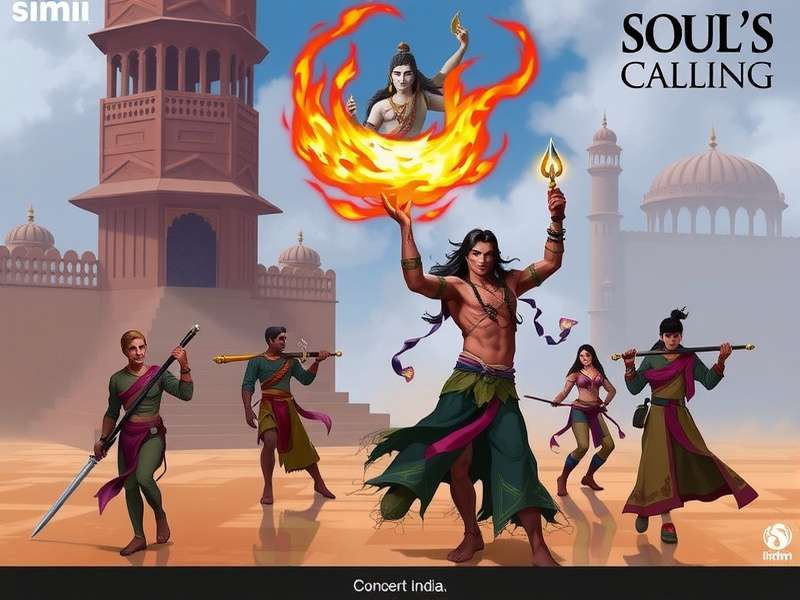
The game’s art style is a love letter to Indian craftsmanship, blending traditional and modern elements to create a visually striking world. The team collaborated with over 50 local artisans from across India to create in-game assets: wood carvers from Gujarat designed the intricate patterns on haveli walls, potters from West Bengal created the terracotta decorations in village homes, and metalworkers from Uttarakhand crafted the weapons and armor.
The color palette draws inspiration from India’s natural landscapes and cultural symbols: deep reds (representing purity and courage) from sindoor and rangoli, golds (representing prosperity) from temple domes and silk sarees, greens (representing life and nature) from forests and agricultural fields, and browns (representing the earth) from mud houses and desert sands. Every location in the game has a distinct visual identity—from the snow-white peaks of the Himalayas to the vibrant blue houses of Jodhpur, from the lush green backwaters of Kerala to the red sandstone forts of Agra.
The music, composed by renowned Indian musician A.R. Rahman (in a guest collaboration), is equally authentic. It features traditional Indian instruments like the sitar, tabla, veena, dholak, and flute, with regional variations to match the game’s locations. In South India, the music leans into Carnatic classical styles; in North India, it features Hindustani classical and folk melodies; in rural areas, it uses simple folk tunes played on traditional instruments. The game’s theme song, "Atma Ki Awaz" (The Voice of the Soul), has become a hit among gamers, with its soulful lyrics and upbeat rhythm capturing the spirit of the game.
Technical Development & Accessibility
Developed using the Unity engine, Soul S Calling India is optimized for a wide range of devices—from low-end mobile phones to high-end gaming PCs. The team prioritized accessibility, ensuring that the game can be played by people of all ages and abilities. Features like adjustable difficulty levels, text-to-speech, and customizable controls make the game inclusive, while support for over 50 regional languages (including Hindi, Tamil, Telugu, Bengali, Punjabi, Marathi, Gujarati, and Malayalam) ensures that players can engage with the game in their mother tongue.
The game’s open world is seamless, with no loading screens between regions—a feat that required significant technical expertise. The team used procedural generation to create large-scale landscapes, but handcrafted key locations (like temples, forts, and villages) to ensure cultural accuracy. They also implemented a dynamic weather system that reflects India’s diverse climates: monsoons in Kerala, snowfall in the Himalayas, heatwaves in Rajasthan, and fog in the Northeast.
Another key technical feature is the game’s AI system, which makes non-playable characters (NPCs) feel realistic and responsive. NPCs have their own daily routines—farming in the morning, praying at temples in the afternoon, celebrating festivals in the evening—and their behavior changes based on the player’s actions. For example, if the player helps a village solve a water crisis, the villagers will greet them warmly and offer rewards; if the player ignores their pleas, they will become hostile and refuse to help.
Gameplay 🎯
Core Mechanics: Soulbearer’s Journey
At its core, Soul S Calling India is an open-world RPG that combines exploration, combat, and storytelling. Players take on the role of a Soulbearer, a mortal chosen by the gods to protect the boundary between Prithvi Lok and Atma Lok. The game begins with the player customizing their character—choosing their name, gender, region of origin, and appearance. The region of origin affects the player’s starting skills: a character from Punjab starts with farming and survival skills, while one from Kerala starts with ayurvedic healing, and one from Rajasthan starts with swordplay and horse riding.
The game’s main objective is to stop the Kaalrakshak, a former Soulbearer who has turned corrupt and wants to merge the two realms—believing that this will end suffering, but in reality, it will destroy both. To do this, the player must travel across India, gathering allies, mastering skills, and collecting "Soul Shards"—powerful artifacts that can restore the boundary between the realms.
Exploration is a key part of the gameplay. The game’s open world is massive, covering over 500 square kilometers of virtual India. Players can travel by foot, horse, elephant, or magical mounts (like the Garuda or Naga, unlocked later in the game). Along the way, they will encounter diverse biomes—mountains, deserts, forests, coasts, and cities—and discover hidden locations like ancient temples, cave systems, and abandoned forts. Each location has its own secrets, side quests, and collectibles, encouraging players to explore every corner of the map.
Combat: Divine Powers & Mortal Skills
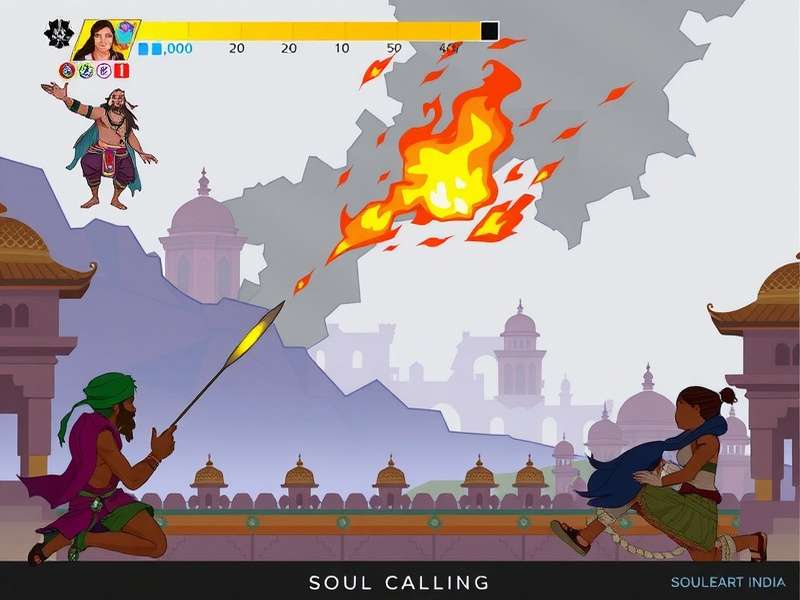
Combat in Soul S Calling India is a mix of melee, ranged, and magic attacks, with a focus on strategy and skill. Players can use a variety of weapons—talwars (swords), khukuris (knives), bows and arrows, spears, and axes—each with its own strengths and weaknesses. Melee weapons are ideal for close combat, while ranged weapons are great for taking down enemies from a distance.
The game’s magic system is based on Indian deities and mantras. Players can unlock three types of magic: Deva Magic (divine powers), Rishi Magic (spiritual abilities), and Kshatriya Magic (warrior skills). Deva Magic includes fire attacks (from Shiva), healing (from Lakshmi), and defense (from Vishnu); Rishi Magic includes illusions (from Brahma), mind control (from Saraswati), and weather manipulation (from Indra); and Kshatriya Magic includes enhanced strength (from Kartikeya), speed (from Hanuman), and durability (from Bhima).
To use magic, players must recite mantras—either by typing them out or using voice commands. The accuracy of the mantra recitation affects the power of the spell: a perfectly recited mantra will unleash a devastating attack, while a poorly recited one will have minimal effect. This adds a unique layer of immersion, as players learn and memorize real mantras while playing the game.
Combat also includes stealth elements, which are useful for avoiding tough enemies or completing quests without being detected. Players can hide in bushes, climb walls, and use distractions (like throwing stones) to sneak past enemies. Stealth is especially important in quests set in forts or temples, where loud combat would alert guards and make the mission more difficult.
Skill Trees: Customizing Your Soulbearer
Soul S Calling India features a deep skill tree system that allows players to customize their character’s abilities based on their playstyle. The skill tree is divided into three paths: Deva, Rishi, and Kshatriya. Each path has 10 tiers of skills, with higher tiers requiring more skill points to unlock.
The Deva path focuses on divine powers and healing. Skills in this path include "Shiva’s Wrath" (a powerful fire attack that damages multiple enemies), "Lakshmi’s Blessing" (a healing spell that restores health to the player and allies), and "Vishnu’s Shield" (a defensive barrier that blocks incoming attacks). This path is ideal for players who prefer to support their allies or play defensively.
The Rishi path focuses on spiritual abilities and magic. Skills in this path include "Brahma’s Illusion" (creates a decoy of the player to distract enemies), "Saraswati’s Wisdom" (increases the player’s intelligence and magic power), and "Indra’s Thunder" (calls down a bolt of lightning to damage a single enemy). This path is ideal for players who prefer to attack from a distance or use strategy to outsmart enemies.
The Kshatriya path focuses on warrior skills and melee combat. Skills in this path include "Kartikeya’s Strike" (a powerful sword attack that deals critical damage), "Hanuman’s Speed" (increases the player’s movement and attack speed), and "Bhima’s Strength" (increases the player’s physical strength and durability). This path is ideal for players who prefer to charge into battle and take down enemies head-on.
Players can also unlock cross-path skills, which combine elements of two or more paths. For example, "Shiva’s Speed" combines Shiva’s fire magic with Hanuman’s speed, allowing the player to move quickly while leaving a trail of fire. Cross-path skills add depth to the skill tree and encourage players to experiment with different playstyles.
Quests: Stories Rooted in Indian Culture
Quests are a central part of Soul S Calling India’s gameplay, with over 200 main story quests and 500 side quests to complete. Each quest is designed to tell a story rooted in Indian culture, whether it’s a main story quest about stopping the Kaalrakshak or a side quest about helping a village prepare for a festival.
Main story quests take players across India, from the Himalayas to Kanyakumari, as they gather allies and Soul Shards. These quests are epic in scale, with memorable boss battles, plot twists, and emotional moments. One standout main quest is "The Battle of Kurukshetra 2.0," where the player must lead an army of allies against the Kaalrakshak’s forces in a massive battle inspired by the Mahabharata.
Side quests are more intimate, focusing on the lives of ordinary people. They cover a wide range of themes—from preserving traditional crafts to solving community disputes, from protecting wildlife to celebrating festivals. Some examples of side quests include:
- The Weavers of Varanasi: Help a group of Banarasi silk weavers protect their craft from a greedy merchant who wants to replace them with machines. The quest involves gathering rare silk threads, teaching the weavers new techniques, and confronting the merchant in a debate about tradition vs. modernity.
- The Sacred Grove of Meghalaya: Resolve a dispute between two Khasi communities over a sacred grove that is home to a rare plant with healing properties. The quest involves mediating between the communities, learning about Khasi traditions, and protecting the grove from loggers.
- Holi in Mathura: Help a village in Mathura prepare for Holi by collecting flowers, making colored powder, and organizing a procession. The quest ends with a festive celebration where players can join in the fun—throwing colored powder, dancing to folk music, and exchanging sweets with villagers.
- The Stepwell of Gujarat: Restore an ancient stepwell in Gujarat that has been damaged by the Kaalrakshak’s minions. The quest involves repairing the stepwell’s structure, cleaning the water, and performing a puja (prayer ceremony) to bless the well. Along the way, players learn about the importance of stepwells in arid regions of India.
Quests in Soul S Calling India are not just about completing objectives—they’re about learning about Indian culture and making meaningful choices. Many quests have multiple endings, depending on the player’s decisions. For example, in "The Weavers of Varanasi," the player can choose to help the weavers defeat the merchant, negotiate a compromise between the weavers and the merchant, or even join the merchant (though this will negatively affect the player’s reputation).
Survival & Crafting: Living Like a Desi
Soul S Calling India also includes survival and crafting mechanics that add realism to the gameplay. Players must manage their hunger, thirst, and stamina as they explore the open world. Hunger can be satisfied by hunting animals (like deer and rabbits) or farming crops (like rice and wheat), while thirst can be quenched by drinking water from rivers, lakes, or wells. Stamina is consumed by running, climbing, and fighting, and can be restored by resting or eating energy-rich foods (like ladoos and jalebis).
Crafting allows players to create weapons, armor, potions, and other useful items using resources gathered from the environment. For example, players can craft a talwar using iron ore and wood, a healing potion using ayurvedic herbs, or a rangoli using colored powder and flowers. Crafting recipes are unlocked by completing quests, talking to NPCs, or discovering hidden manuscripts.
One unique crafting feature is the ability to make traditional Indian foods, which provide temporary buffs to the player’s stats. For example, eating a plate of dosa with chutney increases the player’s speed, while eating a bowl of sambar rice increases their health regeneration. Players can also cook for NPCs, which improves their reputation and unlocks new quests and rewards.
Lore 📜
The Realms: Prithvi Lok & Atma Lok
The world of Soul S Calling India is divided into two realms: Prithvi Lok (the mortal realm) and Atma Lok (the spiritual realm). For millennia, the two realms have existed in harmony, separated by a magical boundary known as the "Atma Veil." The Atma Veil is maintained by the Soulbearers—mortals chosen by the gods to protect the boundary and ensure that neither realm interferes with the other.
Prithvi Lok is the world we know—India, with its diverse landscapes, cultures, and people. It is a realm of mortality, where humans live, love, work, and die. Atma Lok is a realm of spirits, gods, and mythical creatures. It is a place of eternal joy and sorrow, where the souls of the dead reside and the gods watch over Prithvi Lok. The two realms are connected by sacred sites—temples, ghats, and groves—where the Atma Veil is thin, allowing spirits to visit Prithvi Lok and humans to communicate with the gods.
Long ago, during the "First Convergence," the Atma Veil was broken, and the two realms merged. This led to a great war between the gods and the forces of chaos, as spirits and mythical creatures ran amok in Prithvi Lok. The war ended when the first Soulbearer, a warrior named Arjun (not to be confused with the Mahabharata hero), sacrificed themselves to restore the Atma Veil. Since then, Soulbearers have been chosen every generation to protect the boundary and prevent another Convergence.
The Soulbearer: Your Journey
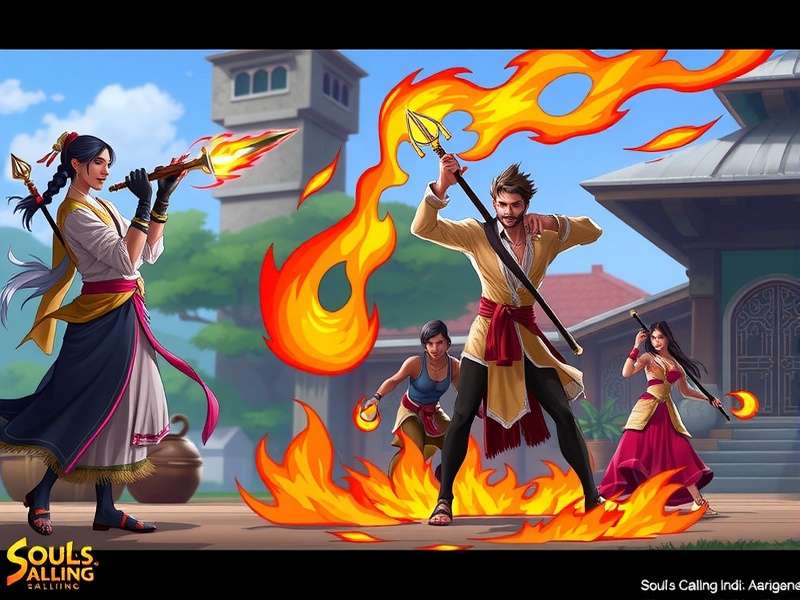
You are the latest Soulbearer, a ordinary person whose life changes forever when you visit a sacred site in your region of origin. For example, if you’re from Varanasi, you might be visiting the Ganges Ghats when you feel a surge of power and see a vision of the gods. They tell you that the Atma Veil is weakening, and the Kaalrakshak is planning to break it. You are chosen to be the new Soulbearer, tasked with gathering the Soul Shards—fragments of the first Soulbearer’s soul—and using them to restore the Atma Veil.
As the Soulbearer, you possess unique powers: the ability to see spirits, communicate with the gods, and wield divine magic. But with great power comes great responsibility. You must navigate the complex world of Prithvi Lok, where people are skeptical of your powers, and Atma Lok, where spirits may help or hinder you. Along the way, you will meet allies who believe in your mission and enemies who want to stop you.
Your journey is not just about saving the realms—it’s about discovering your own identity. As you travel across India, you will learn about your family’s history, your connection to the first Soulbearer, and the true meaning of being a Soulbearer. The game’s story is deeply personal, with moments of joy, sorrow, and self-discovery that resonate with players on a emotional level.
The Kaalrakshak: The Corrupted Soulbearer
The Kaalrakshak, whose real name is Karna, was once a Soulbearer from Uttar Pradesh. He was a kind and noble warrior who dedicated his life to protecting the Atma Veil. But everything changed when his village was destroyed by a flood caused by a breach in the Atma Veil. Karna tried to save his family and friends, but he failed. Grief-stricken and angry, he blamed the gods for not helping him. He began to believe that the separation between the realms was unjust—that humans and spirits should live together, and that the gods were hiding the truth about the Atma Veil.
Karna turned to dark magic, seeking power to merge the realms. He made a deal with the Asuras (demons) of Atma Lok, who promised to help him break the Atma Veil in exchange for control of the merged realm. With their help, Karna became the Kaalrakshak (the Guardian of Darkness), a powerful and corrupt being with the ability to control shadows and raise the dead.
The Kaalrakshak’s motivation is not purely evil—he genuinely believes that merging the realms will end suffering. He thinks that if humans and spirits live together, they can help each other, and that the gods are just afraid of losing their power. But he is blind to the consequences of his actions: merging the realms will destroy both Prithvi Lok and Atma Lok, as the mortal and spiritual worlds are not meant to coexist.
As the Soulbearer, you must not only defeat the Kaalrakshak but also try to reason with him. The game’s final boss battle has multiple endings, depending on your choices: you can kill the Kaalrakshak, convince him to abandon his plan, or even join him (though this leads to a bad ending where the realms are destroyed).
Regional Myths Integration: Stories from Every Corner of India
One of the most unique aspects of Soul S Calling India’s lore is its integration of regional myths and folklore. The game’s story is not just based on Hindu mythology—it draws from the myths and traditions of all Indian states and union territories, ensuring that every player feels represented.
For example, in Tamil Nadu, the player encounters a subplot involving Lord Murugan, the god of war. The player must help Murugan retrieve his sacred spear, which has been stolen by a demon. Along the way, they learn about Murugan’s role in Tamil culture and participate in a Kavadi Attam (a traditional dance performed in Murugan’s honor).
In West Bengal, the player becomes involved in a story based on Durga Puja. The Kaalrakshak has stolen the idol of Durga from a village, and the player must retrieve it before the puja begins. Along the way, they learn about the significance of Durga Puja in Bengali culture and help the villagers prepare for the festival—making clay idols, decorating pandals (temporary temples), and cooking traditional foods.
In Punjab, the player meets a Sikh guru who teaches them about Guru Nanak’s teachings of equality and compassion. The player must help the guru protect a gurdwara (Sikh temple) from the Kaalrakshak’s minions, who want to destroy it. Along the way, they learn about the history of Sikhism and participate in a langar (community meal) at the gurdwara.
In the Northeast, the player encounters myths from the Khasi, Mizo, and Assamese cultures. They help a Khasi village protect a sacred grove from loggers, learn about Mizo folktales about tigers and spirits, and participate in an Assamese Bihu festival (a harvest festival) with traditional music and dance.
These regional subplots are not just side stories—they are integral to the main narrative. Each subplot reveals a piece of the puzzle about the Kaalrakshak’s plan and the Soul Shards, and the allies the player makes in each region help them in the final battle against the Kaalrakshak.
Characters 👥
The Protagonist: The Soulbearer
The protagonist of Soul S Calling India is a customizable character known as the Soulbearer. As mentioned earlier, players can choose their name, gender, region of origin, and appearance. The region of origin not only affects the character’s starting skills but also their backstory and personality.
For example, a male Soulbearer from Rajasthan might be a young prince who ran away from his palace to explore the world, while a female Soulbearer from Kerala might be an ayurvedic healer who wants to use her skills to help others. The character’s personality is shaped by the player’s choices throughout the game—whether they’re kind and compassionate, bold and adventurous, or clever and strategic.
What makes the protagonist unique is their connection to the first Soulbearer. As the game progresses, the player discovers that their character is a descendant of the first Soulbearer, and that their powers are inherited. This connection adds depth to the character’s backstory and gives the player a personal stake in the mission to restore the Atma Veil.
Supporting Cast: Allies from Across India
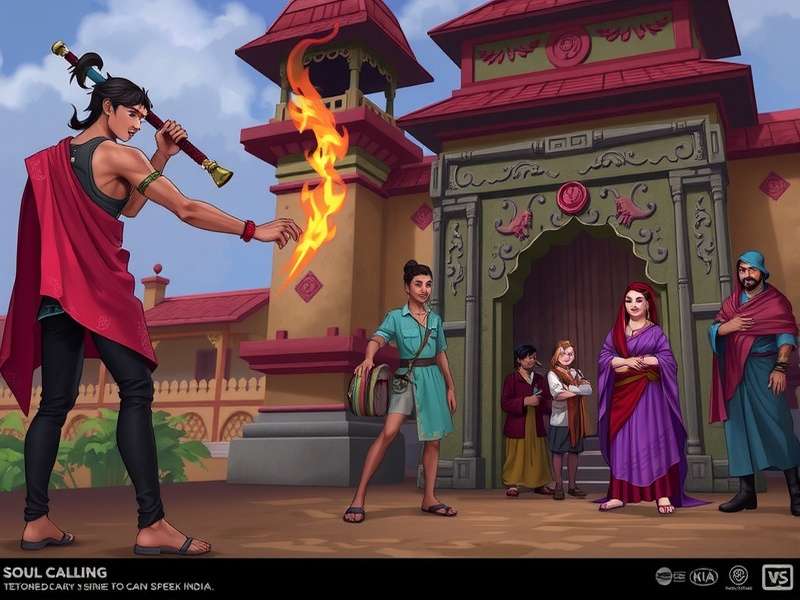
Soul S Calling India features a diverse cast of supporting characters, each with their own unique backstories, personalities, and skills. These characters join the player’s party at different points in the game, helping them in combat, providing valuable information, and adding depth to the story.
- Ravi Chandrasekhar (Tamil Nadu): A wise old pandit (scholar) who lives in a temple in Thanjavur. Ravi is knowledgeable about Hindu mythology, scriptures, and ancient history. He becomes the player’s mentor, teaching them about their powers and the history of the Soulbearers. Ravi is kind and patient, but he can be strict when the player makes reckless decisions. He uses his knowledge of mantras to help the player in combat, casting healing spells and protective barriers.
- Meera Singh (Rajasthan): A fierce warrior princess from Jaipur. Meera’s kingdom was destroyed by the Kaalrakshak’s minions, and she is on a quest for revenge. She is skilled in swordplay, horse riding, and archery, and she becomes the player’s main combat ally. Meera is bold and adventurous, but she has a soft spot for children and animals. She often clashes with Ravi, who prefers diplomacy over combat, but the two eventually learn to respect each other.
- Arjun Nair (Kerala): A young ayurvedic healer from Alleppey. Arjun’s family has been practicing ayurveda for generations, and he is skilled in making healing potions and remedies. He joins the player’s party after they save him from a group of bandits. Arjun is kind and compassionate, and he hates violence, but he will fight to protect his friends. He provides the player with healing items and uses his knowledge of herbs to craft buffs that enhance the party’s stats.
- Jassi Kaur (Punjab): A cheerful farmer from Amritsar. Jassi is skilled in farming, hunting, and survival, and she teaches the player how to gather resources and craft food. She joins the player’s party after they help her protect her farm from the Kaalrakshak’s minions, who want to destroy it to build a fortress. Jassi is optimistic and friendly, and she provides comic relief with her witty one-liners. She uses her farming tools (like a sickle and a plow) to fight enemies, and she can summon animals (like cows and dogs) to help in combat.
- Lila Das (West Bengal): A talented artist and storyteller from Kolkata. Lila is skilled in painting, music, and dance, and she uses her art to communicate with spirits. She joins the player’s party after they help her retrieve a lost manuscript of Bengali folktales. Lila is creative and imaginative, and she often tells stories that provide clues about the Soul Shards. She uses her art to cast illusions that distract enemies, and she can summon spirits to help in combat.
Each supporting character has their own character arc, which is resolved through side quests. For example, Meera’s arc involves confronting her father, who abandoned her after the kingdom was destroyed; Arjun’s arc involves proving to his family that he is a capable healer; and Jassi’s arc involves saving her farm and starting a community garden. Completing these character arcs not only deepens the story but also unlocks new skills and abilities for the characters.
Antagonists: The Kaalrakshak’s Forces
The Kaalrakshak is not alone in his quest to merge the realms—he is supported by a group of powerful villains, each with their own motivations and abilities. These antagonists are encountered throughout the game, serving as boss battles and advancing the main story.
- Maya (Asura Queen): The queen of the Asuras, who made a deal with the Kaalrakshak to help him merge the realms. Maya is a powerful sorceress who can control illusions and shadows. She is motivated by a desire to rule the merged realm, as she believes that the Asuras have been oppressed by the gods for too long. Maya is encountered in the early stages of the game, and she serves as a recurring boss, testing the player’s skills with her illusion-based attacks.
- Rana Vikram (Corrupted Raja): A former raja (king) from Madhya Pradesh who allied with the Kaalrakshak in exchange for power. Rana Vikram is a skilled warrior who wields a massive axe, and he commands an army of bandits and mercenaries. He is motivated by greed and a desire to expand his kingdom. Rana Vikram is encountered in the middle of the game, and he is fought in a massive battle in his fort.
- Saraswati’s Betrayer (Fallen Rishi): A former rishi (sage) who was once a follower of Saraswati, the goddess of knowledge. He betrayed the gods and joined the Kaalrakshak after he was denied the power he believed he deserved. He is a powerful magic user who can control fire, water, earth, and air. He is motivated by jealousy and a desire for recognition. The Saraswati’s Betrayer is encountered late in the game, and he is fought in a temple in Varanasi.
- Kaalrakshak (Karna): As the main antagonist, the Kaalrakshak is the most powerful villain in the game. He has all the powers of a Soulbearer, plus dark magic from the Asuras. He can control shadows, raise the dead, and wield a powerful sword made from darkness. The final battle against the Kaalrakshak takes place in the heart of Atma Lok, and it is a multi-phase battle that tests all of the player’s skills.
What makes these antagonists compelling is their complexity. They are not just evil for the sake of being evil—they have motivations that players can understand, if not agree with. This adds depth to the story and makes the player’s choices feel more meaningful.
Cultural Impact 🇮🇳
Promoting Indian Culture Globally
Soul S Calling India has had a significant cultural impact, both within India and around the world. For the first time, a mainstream video game has celebrated Indian culture in such depth, introducing global audiences to India’s mythology, folklore, languages, and traditions. The game has been praised by Indian diaspora communities, who say it helps them connect with their roots and teach their children about their heritage.
In countries like the United States, Canada, and the United Kingdom, where there are large Indian populations, the game has become a cultural phenomenon. Indian community centers have organized game nights where people gather to play Soul S Calling India and discuss the cultural references. Schools with large Indian student populations have even used the game’s Cultural Encyclopedia as a supplementary resource for teaching Indian history and culture.
The game has also received attention from non-Indian audiences, who are curious about Indian culture. Many non-Indian players have taken to social media to share their experiences, saying that the game has inspired them to learn more about India. Some have even planned trips to India to visit the places featured in the game, like the Taj Mahal, the Ganges Ghats, and the backwaters of Kerala.
Supporting Local Artisans & Communities
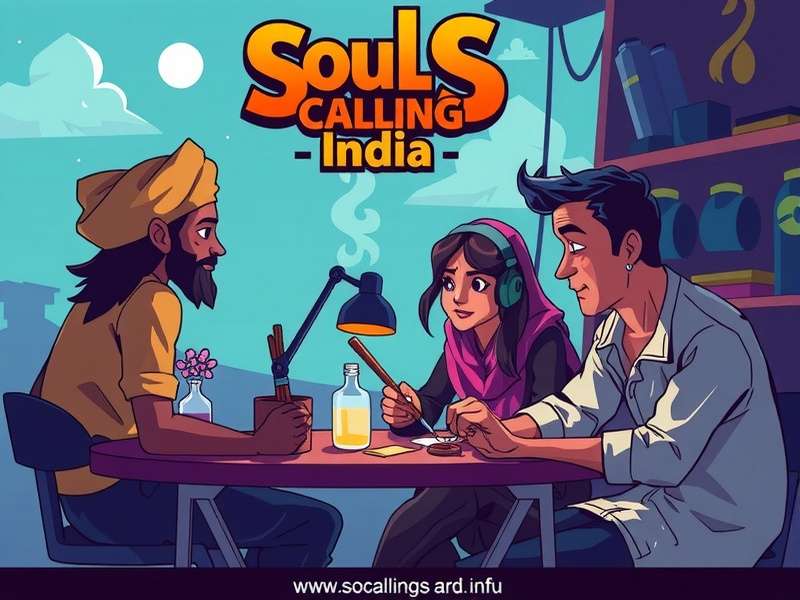
One of the most significant ways Soul S Calling India has impacted Indian culture is by supporting local artisans and communities. During development, the team collaborated with over 50 local artisans from across India to create in-game assets, and a portion of the game’s revenue is donated to organizations that support traditional crafts.
For example, the weavers of Varanasi who helped design the game’s Banarasi silk costumes have seen a surge in demand for their products, as players have become interested in traditional Indian textiles. The potters of West Bengal who created the game’s terracotta decorations have been able to expand their businesses, hiring more workers and preserving their craft.
The game has also supported rural communities by featuring their traditions and way of life. For example, the farming mechanics in the game are based on real rural farming practices, and the team worked with farmers in Punjab and Maharashtra to ensure accuracy. This has helped raise awareness about the challenges facing rural farmers in India, such as water scarcity and climate change.
Educational Value: Learning Through Gaming
Soul S Calling India is not just a game—it’s an educational tool that teaches players about Indian culture, history, and mythology. The game’s Cultural Encyclopedia, which is unlocked as players progress through the game, provides detailed information about the traditions, history, and significance of the elements they encounter. For example, when players visit a gurdwara, the encyclopedia explains the Sikh faith, the importance of langar, and the history of the Golden Temple. When they encounter a mantra, the encyclopedia explains its meaning and origin.
Many schools and educational institutions in India have recognized the game’s educational value and have started using it as a teaching tool. For example, a school in Chennai uses the game to teach students about Tamil Nadu’s history and culture, while a school in Delhi uses it to teach Hindu mythology. The game’s interactive nature makes learning fun and engaging, and students are more likely to retain information they learn through gameplay.
The game also promotes multilingualism, as it supports over 50 regional languages. Players can switch between languages at any time, allowing them to learn new languages while playing. For example, a player from North India can switch to Tamil to learn basic phrases, while a player from South India can switch to Punjabi. This has helped promote linguistic diversity in India and encourage people to learn other regional languages.
Changing the Narrative of Indian Gaming
Soul S Calling India has also had a significant impact on the Indian gaming industry, changing the narrative that Indian games are low-quality or lack depth. For years, Indian gamers have been forced to play games developed in the West or East Asia, which often have little to do with Indian culture. Soul S Calling India has proven that Indian games can be just as high-quality and engaging as international games, and it has inspired other Indian game developers to create culturally authentic content.
The game’s success has also attracted international attention to the Indian gaming industry. Major gaming companies like Sony, Microsoft, and Nintendo have started investing in Indian game studios, recognizing the potential of the Indian market. This has led to more job opportunities for Indian game developers and has helped the Indian gaming industry grow.
Another way the game has changed the narrative is by appealing to a wide range of players. Unlike many international games, which are targeted at hardcore gamers, Soul S Calling India is accessible to casual gamers, children, and older adults. This has helped expand the Indian gaming audience and make gaming more inclusive.
Reception & Commercial Performance ⭐
Critical Acclaim
Soul S Calling India has received widespread critical acclaim from gaming publications, cultural experts, and players alike. Gaming sites like IGN India, Gamespot India, and Desi Gamers Hub have praised the game’s attention to detail, engaging gameplay, and cultural authenticity.
IGN India gave the game a 9.5/10 rating, calling it "a masterpiece of cultural storytelling" and "the best Indian game ever made." The review praised the game’s open world, combat system, and character development, and noted that "Soul S Calling India is not just a game—it’s a love letter to India."
Gamespot India gave the game a 9/10 rating, highlighting its educational value and cultural impact. The review said, "Soul S Calling India is more than just entertainment—it’s a tool for preserving and promoting Indian culture. It’s a game that every Indian should play, and every non-Indian should experience to learn about one of the world’s oldest and richest cultures."
Cultural experts have also praised the game. Dr. Anita Desai, a renowned Indian author and cultural critic, said, "Soul S Calling India is a remarkable achievement. It captures the essence of Indian culture in a way that no other medium has done before. It’s a game that will be remembered for generations to come."
Players have also expressed their love for the game on social media. On Twitter, Instagram, and Facebook, players have shared their experiences, posting screenshots, videos, and stories about their journey as the Soulbearer. Many players have